

✍️ Ultimate Flow: How Optimal Experience Transformed PSG Into an Autotelic Club and the Kings of Europe
The psychology behind Luis Enrique's success at Paris Saint-Germain.
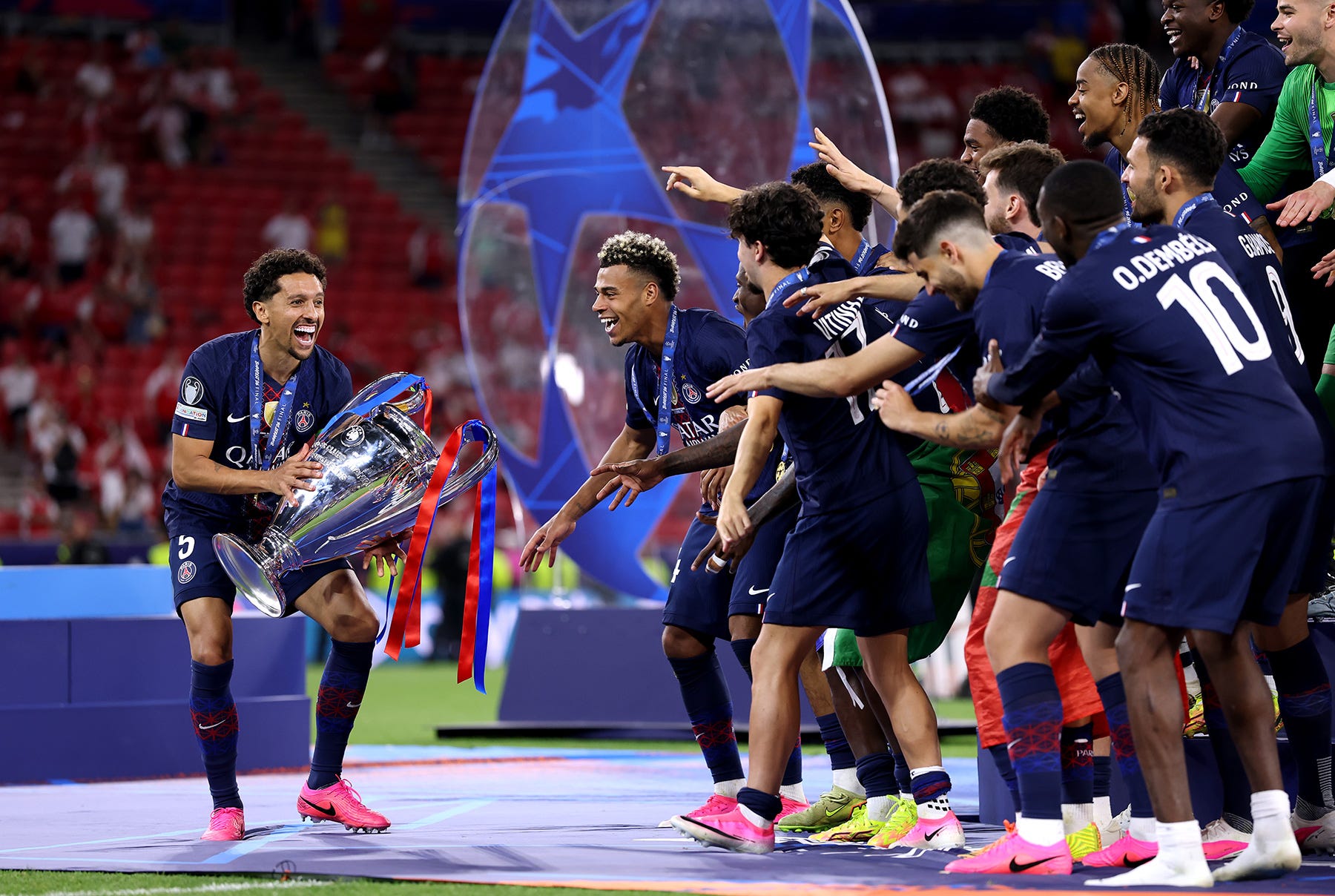
Two Champions League titles. Back to back. Only the second club in the modern era to achieve it, following the unprecedented dynasty of Real Madrid under Zinedine Zidane. In Munich on May 31, 2025, Paris Saint-Germain dismantled Internazionale 5–0 in the largest margin of victory in the history of a major European club final—a performance so total, so immersive, so collectively alive that the footballing world stopped and stared. Then, in Budapest on May 30, 2026, they did it again—grinding out a 1–1 draw against a ferocious Arsenal side before prevailing 4–3 in a penalty shootout that confirmed what was no longer merely possible or promising: it was permanent.
Paris Saint-Germain are the kings of Europe.
And they got there by going into Flow.
In February of 1993, Dallas Cowboys head coach Jimmy Johnson held up a copy of Mihály Csíkszentmihályi's Flow: The Psychology of Optimal Experience to reporters after winning the Super Bowl and declared: "My team has won because of this book. We did what is written in this book. Read this book!" That moment sent me down a path of study and conviction that I eventually brought to PSGTalk across a series of articles arguing that what PSG needed, above all else, was not another galáctico—but a wholesale psychological and organizational revolution built around Flow Theory.
I argued that Paris Saint-Germain needed to eliminate the obstacles to flow state at every level of the organization. I argued that broken goal-setting, insufficient feedback, mismatched skills and challenges, fractured concentration, and a culture oriented around fear, ego, and anxiety rather than intrinsic motivation were the root causes of the Remontadas—not just the players, not just the tactics, not just the money or the league. The psychology was wrong.
What I didn't know then was that the man who would fix it was already playing football in Avilés, Spain, developing the ferocious, uncompromising competitive identity that would one day make him, quietly, the most important coaching mind in the world.
His name is Luis Enrique Martínez García. And whether he has ever read Csíkszentmihályi or not, he has built—methodically, defiantly, and with an almost eerie precision—the closest thing professional football has ever seen to a flow state organization.
The End of the Broken Goal
In Part I of this series, I wrote at length about the broken goal that had defined PSG's psychological culture for over a decade: "win the Champions League," conceived as a light switch—on or off, final victor or failure, with nothing actionable in between. That kind of goal doesn't produce flow. It produces anxiety. It produces the paralysis and individual retreat that characterized every high-pressure European night at the Parc des Princes when a giant came to town, and PSG crumbled.
Luis Enrique arrived in the summer of 2023 and, with the departures of Neymar Jr. and Lionel Messi—and the impending exit of Kylian Mbappé—he was handed what most observers considered a crisis. He recognized it as an opportunity. He replaced the broken goal with something far more powerful: the daily, relentless, measurable pursuit of perfection as a collective.
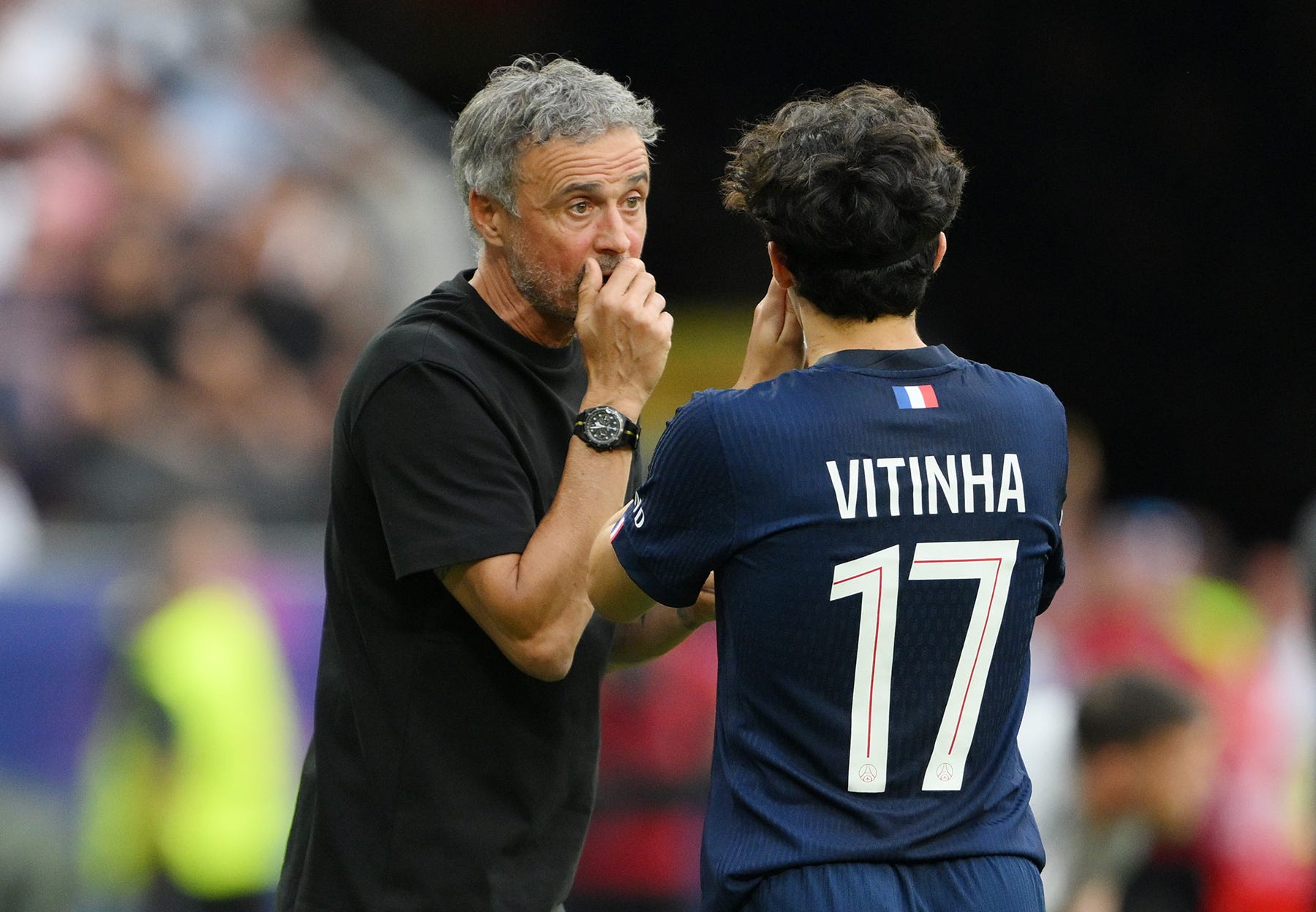
This was not abstract. Enrique's preseason was notoriously demanding—intense, physically punishing, psychologically clarifying. Players who arrived expecting the relaxed kick-abouts that had long characterized PSG's culture under previous regimes found something entirely different. The message was immediate and unambiguous: the goal here is not a trophy. The goal is the standard. The trophy is what happens when you live the standard every day.
"As a club and a city," Enrique said after the 2026 final in Budapest, "it's incredible to win, and I think we deserved it over the course of the season." Note the framing—over the course of the season. Not "we got lucky in the final." Not "the best team won on the night." Over the course of the season. The goal, the process, the standard—that's where the victory was located. The final was merely the confirmation.
The Feedback Revolution
The second component of flow-conducive environments is feedback: clear, immediate, and directly connected to the goal that's been set. In my previous writing on this, I used Marco Verratti's alleged off-pitch lifestyle as a case study in what happens when feedback loops break down—when the culture tolerates self-sabotage because no one in authority has the courage or clarity to name it.
Luis Enrique's feedback culture is legendary—and legendarily uncomfortable for those who aren't ready for it.
His use of video analysis is exhaustive and unsparing. No player—regardless of status, contract value, or nationality—is exempt from public, direct, and often pointed correction. Reports from inside the Camp des Loges during his first season described a manager who called out errors in real time, during training, without softening the delivery with diplomacy. Players described him, over time, as "firm but fair"—and crucially, as someone for whom they would "run through a wall," precisely because the feedback was always in service of the shared goal rather than in service of individual ego management.
This is exactly what Csíkszentmihályi described: feedback that drives flow is superior information on what is right and what is wrong in the culture—delivered not to shame, but to calibrate. Enrique's feedback culture created the conditions in which players could measure themselves against the relentless standard every single day, and know exactly where they stood.
“…if you don’t press and you don’t run, he puts you on the bench.” - Ballon d’Or winner Ousmane Dembélé on what Luis Enrique expects, consistently, from all players, regardless of status.
Ousmane Dembélé is the supreme testament to this. Once synonymous with inconsistency—arriving late to training, injured, distracted, a cautionary tale about squandered talent—he became, under Enrique's feedback culture, a Ballon d'Or winner. Think about what that requires. Not just ability. Not just fitness. A complete psychological reorientation. Dembélé had to believe in the standard, internalize the feedback, and recommit daily to a version of himself that had previously felt out of reach. He did it. And the club gave him the environment—the clear goal, the relentless feedback, the matched challenge—that made it possible.
Challenges Matches to Skills: The Architecture of the Collective
In Part II, I wrote about the third component of flow: the proper alignment of challenges to skills. Too little challenge produces boredom. Too much challenge, relative to skill, produces anxiety. The sweet spot—where skill is fully and just barely equal to the demand—is where flow lives.
PSG's previous superstar model was architecturally incompatible with this principle. When Mbappé, Neymar, and Messi shared a pitch, the challenges facing the other players were not calibrated to their skills—they were calibrated to survival around the galaxy of stars. Role players had no clarity. The system had no internal logic except "give it to the superstar." For the stars themselves, Ligue 1 opponents presented zero challenge whatsoever, and Champions League opponents—presented against a backdrop of zero challenge preparation—induced anxiety rather than flow.
Enrique dismantled this architecture entirely.
His system—a high-intensity, positionally fluid 4-3-3 that collapses into a dense 4-5-1 out of possession—assigns each player a role of genuine challenge and genuine demand. Warren Zaïre-Emery, still only 20 years old during the 2025/26 season, was asked to function as the team's technical and positional metronome—reading the game ahead of him, distributing under pressure, tracking back, maintaining tempo. That is an enormous challenge for a young player. But Enrique calibrated it to Zaïre-Emery's precise skill set, expanded it incrementally, and watched as the player grew into it, then beyond it.
Bradley Barcola was asked to function as a pressing machine and transition threat simultaneously. Khvicha Kvaratskhelia—arriving from Napoli in January 2025 for €70 million—was integrated into a system that demanded collective responsibility alongside individual brilliance. Désiré Doué, 20 years old, scored twice in the 2025 UCL final against Inter Milan and won UEFA's award for the best player of the match. Four players under the age of 25 started the 2026 final against Arsenal.
I haven’t come close—and don’t have enough time—to fully explore flow as expressed through the work of dominant midfielders Vitinha and João Neves.
This—all of this—is the flow architecture in action: young players given challenges just beyond their current reach, in a culture that provides the feedback and goal clarity to meet them—and surpass them.
Concentration, Focus, and the Arete of the Lucho Era
The ancient Greeks spoke of arete—excellence of any kind, achieved through disciplined formation of attention. Werner Jaeger, in his masterwork Paideia, submitted that the Greek mentality at its best was "to be always pre-eminent." For the Chinese, the concept of kung fu—disciplined excellence through concentrated practice—applied not just to martial arts but to any endeavor undertaken with complete attention.
Luis Enrique's PSG embodies this in ways that PSG's previous iterations never approached.
The pressing game—which Enrique runs with a tactical rigor that borders on the militant—requires total, uninterrupted concentration from every player on the pitch, every second the team is out of possession. There is no switching off. There is no waiting for the star to fix things. The press is a collective act that demands that eleven minds be fully present simultaneously. When it functions—as it did in Munich, as it did across an entire season in 2024/25 that produced an extraordinary sextuple—it is one of the most aesthetically complete expressions of collective flow in the history of the game.
During the 5-0 demolition of Inter Milan, the patterns were not those of individual brilliance imposed on a passive collective backdrop. They were something more profound: Achraf Hakimi arriving with conviction from right back, Doué arriving with the spatial intelligence of a player three times his age, Kvaratskhelia combining with the speed of thought that only comes when fear has been fully expelled from the mental framework. These were men in flow, individually and together—time slowing around them, actions arriving before conscious thought, the task autotelic, intrinsically rewarding, complete.
Control, Loss of Self-Consciousness, and the Transformation of Time
In Part II, I wrote: "Control is having such clarity in the lead-up to intense moments that you dictate to those moments, rather than them dictating to you." For over a decade, PSG fans watched their club be dictated to—by Barcelona, by Manchester United, by Real Madrid, by the weight of their own expectation and the fragility of their own identity.
The 2026 final in Budapest was the definitive proof that this psychological condition has been permanently reversed.
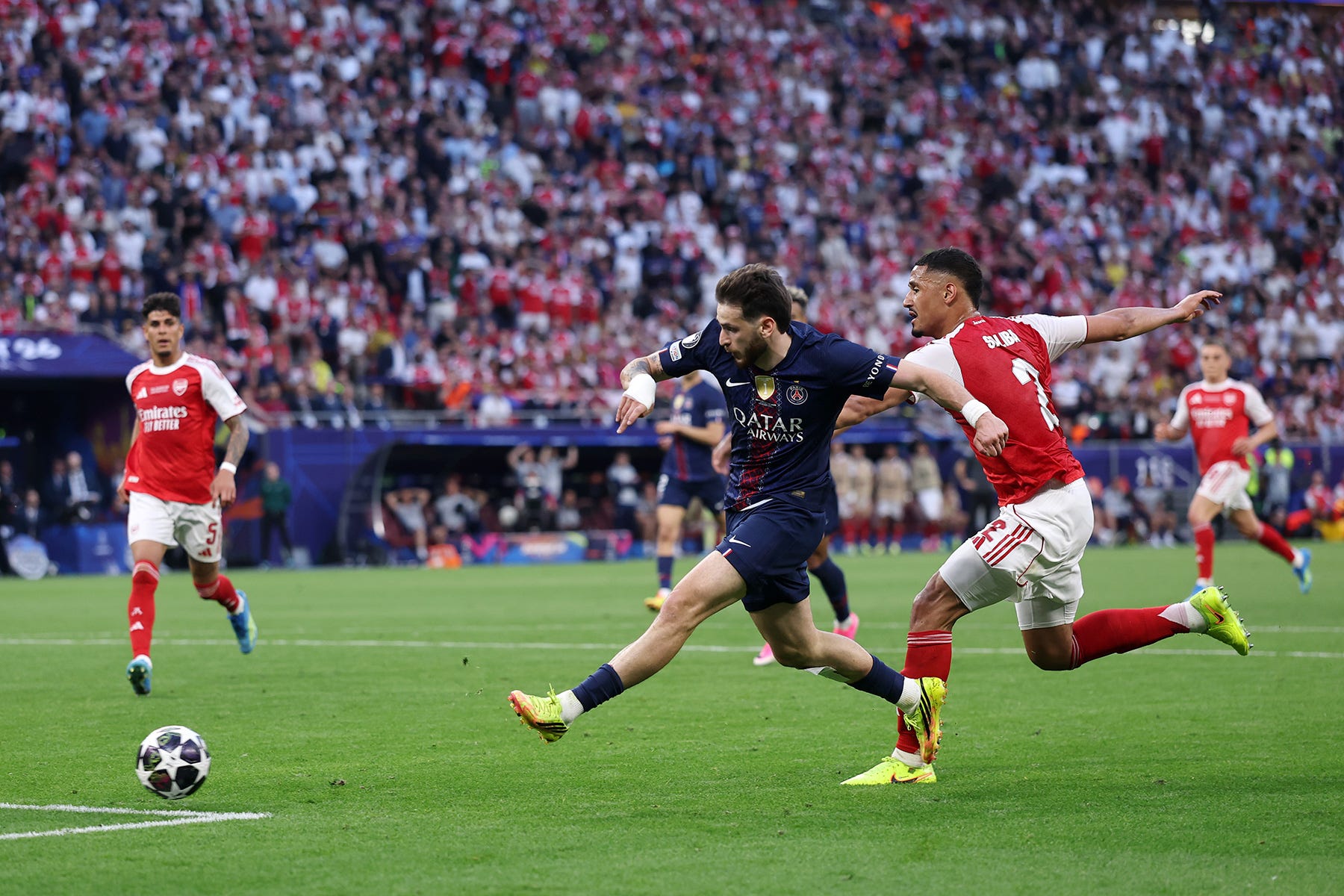
Arsenal, under Mikel Arteta, is one of the most tactically sophisticated, psychologically robust sides in Europe. They pressed with ferocity, scored first through Kai Havertz in the sixth minute, and for long stretches of the match controlled the tempo. The PSG of 2017 would have wilted. The PSG of 2019, 2021, 2022 would have crumbled under the weight of the occasion and the deficit.
This PSG absorbed it, adapted, and found the equalizer through Dembélé—converted from the penalty spot after Kvaratskhelia drew the foul—and then calmly, collectively, in a penalty shootout, prevailed 4-3 when Arsenal's Gabriel blazed the decisive kick over the bar.
Enrique's own words afterward: "It's stronger than last year because we knew before the match just how difficult it would be. The final was a real battle." That is the language of a man in control—not despite the difficulty, but through it. He prepared his players to understand that difficulty is not an obstacle to flow; calibrated correctly, difficulty is the precondition of it.
The Autotelic Club
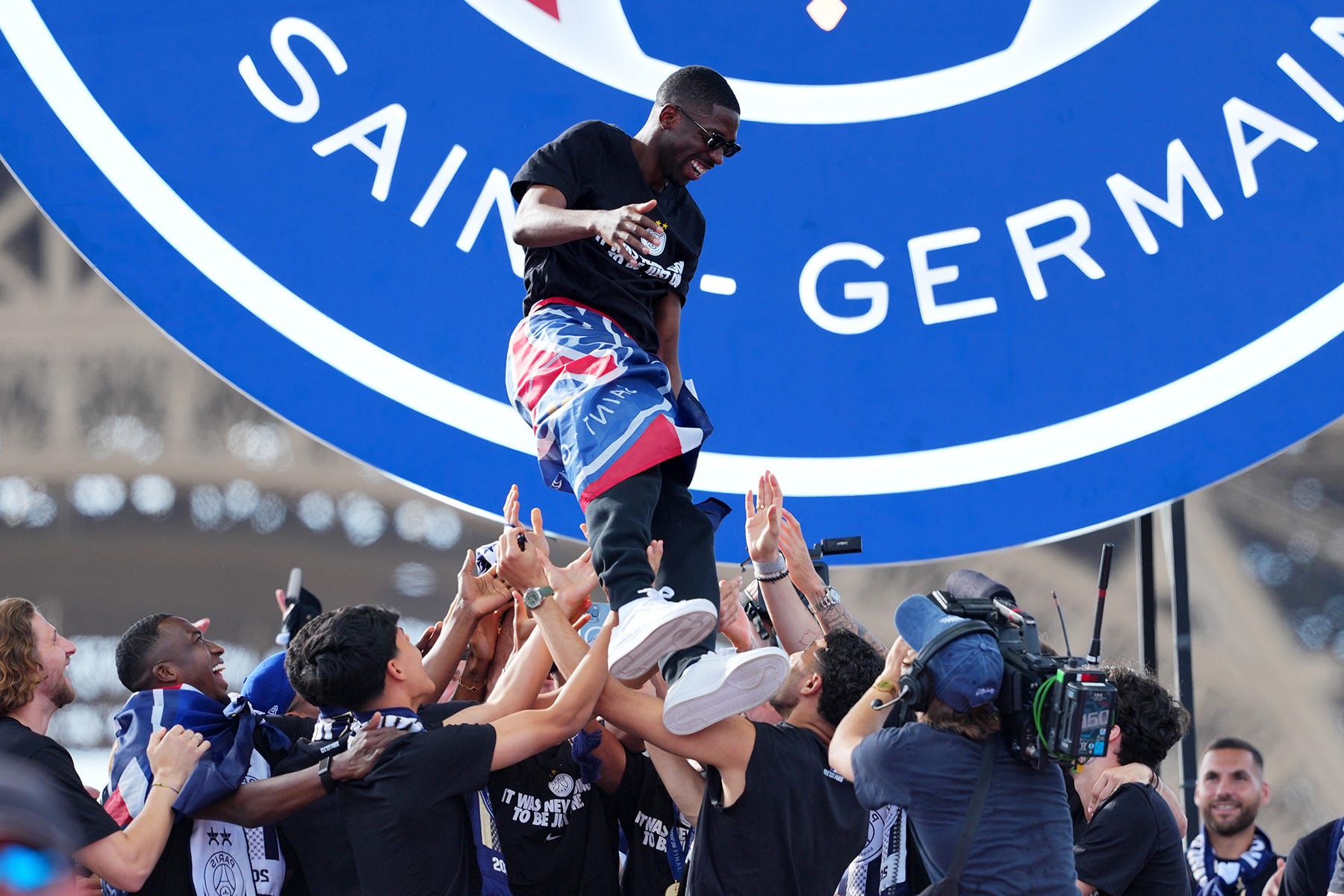
Csíkszentmihályi's ultimate insight was that the highest expression of flow renders the activity autotelic—intrinsically rewarding, worth pursuing for its own sake, independent of external validation or outcome. The UCL trophy matters. Of course it does. But it is the downstream consequence of something far more fundamental: a daily culture of relentless collective pursuit.
What Enrique has built at PSG is an autotelic club.
The evidence is everywhere. In the nature of the training sessions—described by those with access as genuinely intense, competitive, and purpose-driven in ways that the previous era's sessions never were. In the player profiles: not stars who demand the spotlight, but contributors who derive their identity from the system. In the way Enrique publicly celebrates defensive work, transitional press recoveries, tactical discipline—the things that don't make highlight reels but are the structural foundation of everything that does. In the way young players like Doué, Mayulu, and Zaïre-Emery speak about the club: not as a vehicle for individual advancement, but as a place where they are becoming, together, something larger than themselves.
Senny Mayulu came on as a substitute in the 2025 UCL final and scored in the 87th minute to make it 5-0. He was 19 years old. Asked afterward what it felt like, he said he didn't even think—he just reacted. He was in flow.
That is the ultimate destination of everything Csíkszentmihályi described, everything Jimmy Johnson understood, everything I have been writing about on this platform since 2019: a moment when the work is so well prepared, the culture so deeply ingrained, the goal so clearly pursued that conscious thought gives way to pure action—and the action is perfect.
Coda: The Promise Fulfilled
When I wrote the first entry in this series in 2019, PSG had just been eliminated from the Champions League by Manchester United in circumstances so psychologically revealing they bordered on the diagnostic. I wrote that what the club needed was not another transfer window solution but a wholesale reorientation—a rethinking of goal, feedback, challenge, concentration, control, and the autotelic culture that makes elite performance not just possible but inevitable.
Five years later, Luis Enrique arrived and built exactly that.
He has now won three Champions League titles—with Barcelona in 2015, and with PSG in back-to-back 2025 and 2026 campaigns—placing him alongside Pep Guardiola, Bob Paisley, and Zinedine Zidane as one of the most decorated managers in the history of European football. Only the second manager after Zidane to win consecutive UCL titles. Only the second club after Real Madrid to retain the trophy in the modern era.
Jimmy Johnson held up Flow in February 1993 and said his team had done what was written in it. Thirty-two years later, Luis Enrique—perhaps without ever having read a single page—has done something more complete than Johnson, more sustained, and on the largest stage the club game offers.
He has built a flow organization.
He has taken Paris Saint-Germain into the stratosphere.
And for those of us who believed, even in the darkest years of the Remontadas, that this was always what the club was capable of—that the ingredients were always present, that only the psychology was missing—there is something almost unbearably satisfying about watching it come to pass.
Allez Paris; fier de nos couleurs.
Mel Brennan’s first solo book, Saving Soccer (Fixing Football outside North America) is available in print and ebook from 8th June 2026, from all major retailers; part memoir, part exposé, part call to arms, it takes readers inside the corridors of power at CONCACAF and FIFA, from Trump Tower boardrooms to World Cup congresses in Seoul and Zurich, illuminating how the beautiful game came to be run so badly, and making a compelling case that now is the time to fix it. Mel has been writing about the psychology of Paris Saint-Germain for PSGTalk since 2019. His previous pieces in this series include What's Missing from the Psychology of PSG and Part II: Inducing Flow, Elevating Playmakers.
 | A guest post by
|